A dead battery is frustrating enough on its own. The last thing you want is to get the car started and then wonder whether the jump caused a second problem somewhere in the electrical system. That concern is not unreasonable. Modern vehicles have much more electronics than they used to, and careless jump-starting can create trouble if the process is rushed or done in the wrong order.
The good news is that a jump start can be done safely if it is handled properly.
Why Jump Starting Needs More Care Than It Used To
Older vehicles gave drivers a little more room for sloppy habits. Many newer cars do not. They rely on sensitive modules, computers, charging controls, and electrical systems that do not respond well to voltage spikes or backward cable placement. A simple mistake with jumper cables can turn one no-start problem into blown fuses, damaged modules, or charging-system issues.
That is why the goal is not just getting the engine to fire. The goal is to get it started without adding another repair to the list.
Start By Confirming The Battery Is Really The Problem
Not every no-start means the battery is dead. A bad starter, poor battery cable connection, failed alternator, or another electrical issue can create a similar complaint. If the dash is dim, the car clicks rapidly, or the engine cranks very slowly, the battery is a reasonable suspect. If the battery is swollen, leaking, badly corroded, or visibly damaged, do not try to jump it.
A jump start is for a weak or discharged battery, not for a physically unsafe battery.
Use The Correct Cables And The Correct Order
The biggest rule is simple: do not guess. Jumper cables need to go on in the right order and come off in the right order.
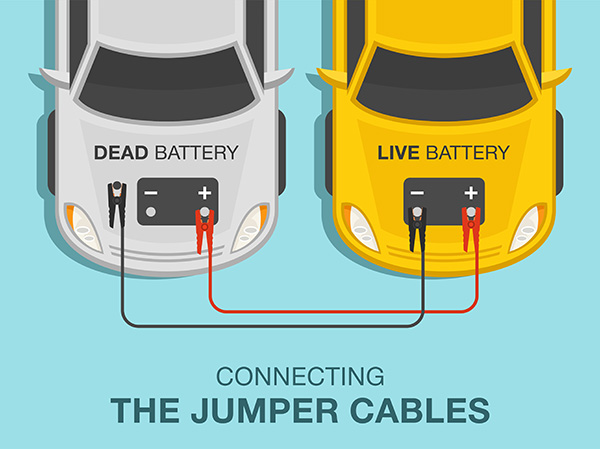
A safe sequence looks like this:
- Connect the positive cable to the dead battery first
- Connect the other positive end to the good battery
- Connect the negative cable to the good battery
- Connect the final negative end to a solid metal ground on the disabled vehicle, away from the battery if possible
That last step matters. Using a proper ground point helps reduce the risk of sparks near the battery.
Do Not Rush The Process
Once the cables are connected, give the dead battery a little time. Let the donor vehicle run for a few minutes before trying to start the disabled one. A lot of drivers rush straight to the key and then wonder why the jump did not work cleanly.
If the disabled vehicle does not start after a reasonable attempt, do not keep grinding the starter over and over. That can overheat components and create more strain on both vehicles. At that point, the problem may be bigger than a low battery.
Make Sure The Cables Never Touch The Wrong Places
One of the fastest ways to cause electrical damage is by crossing connections or letting the clamps touch where they should not. Positive and negative must stay exactly where they belong. Reversing polarity is where serious damage can happen, especially on modern vehicles with more advanced electronics.
It also helps to keep the cables clear of moving engine parts. Fans, belts, and pulleys are not the place to find out that a cable was hanging too loosely.
Remove The Cables In Reverse Order
Once the disabled car starts, do not yank the cables off randomly. Remove them in reverse order from how they went on:
- Remove the negative ground from the restarted vehicle
- Remove the negative from the donor battery
- Remove the positive from the donor battery
- Remove the positive from the restarted vehicle
That helps keep the process controlled and reduces the chance of accidental contact in the wrong place.
Why Repeated Jump Starts Point To A Bigger Problem
A jump start should solve a temporary battery drain, not become part of your weekly routine. If the vehicle keeps needing one, the battery may be worn out, the alternator may be falling behind, or there may be a parasitic drain pulling power while the car sits. In those cases, the jump start is only buying time.
A few warning signs that point toward a larger issue include:
- Repeated jump starts in a short period
- Dim lights while driving
- Slow cranking even after a successful jump
- A battery warning light on the dashboard
That is where an inspection matters. The battery may not be the only part involved.
When It Is Better Not To Jump It Yourself
Some situations call for more caution. If the battery is cracked, swollen, leaking, or heavily corroded, leave it alone and have the vehicle inspected. The same goes for a car that has been showing major electrical issues, heavy warning-light activity, or signs that the charging system is already unstable.
A careful jump start is one thing. Forcing power into a battery or electrical system that is already in bad shape is another.
Why Testing The System Afterward Is A Smart Move
Once the car is running again, the next question is why it died in the first place. A proper battery and charging-system test helps confirm whether the battery is weak, the alternator is undercharging, or something else in the electrical system is causing the trouble. That is how you avoid getting stranded again a few days later.
A jump start gets the car moving. Testing is what tells you whether the problem is actually solved.
Get Battery And Charging System Service In Cottonwood, AZ, With Eaton Automotive
If your car needs a jump start or keeps losing battery power, Eaton Automotive in Cottonwood, AZ, can inspect the battery, test the charging system, and help you find the real cause before a no-start turns into electrical damage or repeated breakdowns.
Bring it in before another jump start becomes the only plan you have left.