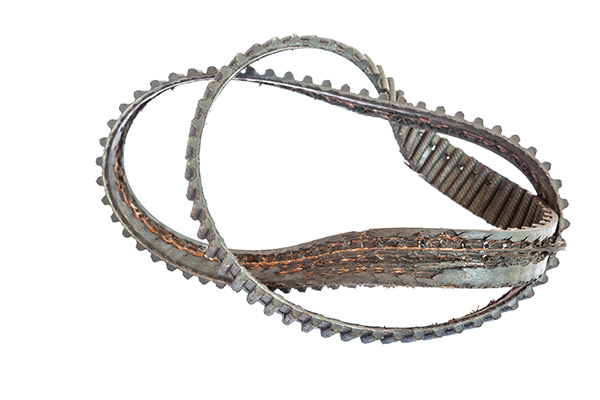
Arizona heat is hard on anything made of rubber, and engine belts are no exception. Your serpentine or accessory drive belt spends months sitting in a hot engine compartment while also bending around pulleys thousands of times every time you drive.
The damage does not always show up as one obvious crack. Heat can harden the rubber, weaken the ribs, glaze the surface, and make the belt less flexible long before it actually breaks. After a long Arizona summer, checking the belt before cooler weather arrives is a simple way to avoid getting stranded by a part that was already near the end of its life.
Cracks and Missing Rib Material Are Clear Warning Signs
Older belts can develop cracks across the ribs or lose small sections of rubber. On some newer belt designs, obvious cracking is less common, so we also look for missing rib material, frayed edges, and a surface that looks worn unevenly.
At our shop, we inspect both sides of the belt instead of checking only the smooth outer surface. The ribbed side does most of the work and can show damage that is hard to see while the belt is still installed. If cords are showing or sections of rubber are separating, don't delay replacement.
A Shiny or Glazed Belt Has Been Slipping
A belt that looks unusually shiny has probably been slipping against one or more pulleys. Heat from that slipping can harden the surface even more and reduce the belt's ability to grip.
The belt itself might be worn, but glazing can also point to a weak tensioner, a pulley that isn't turning freely, or an accessory beginning to drag. We check the complete belt drive before installing a replacement because a new belt will quickly develop the same damage if the original cause is still there.
Squealing and Chirping Deserve a Closer Look
A short squeal when the engine starts or the A/C compressor engages can signal a slipping belt. Chirping can point to alignment issues, a damaged rib, or a pulley that isn't tracking correctly.
Arizona heat can make an already aging belt harder and less flexible. If the noise has become more frequent after months of hot weather, we want to inspect belt condition, pulley alignment, and tension. Replacing the belt based on noise alone isn't always the right repair, but ignoring a repeatable squeal isn't a good plan either.
Heat Can Damage the Belt Without Making It Look Terrible
One tricky thing about heat damage is that the belt can still look reasonably normal. Rubber loses flexibility as it ages, and a hardened belt does not wrap around the pulleys as well as a healthy one.
Signs that deserve attention include:
- A stiff or brittle feel
- Shiny sections on the ribs
- Frayed edges
- Small pieces missing from the belt
- Cracks between the ribs
- Rubber dust around nearby pulleys
- Repeated squealing
- A belt that looks polished instead of textured
During an inspection, we look at the belt as part of the complete drive system. Appearance helps, but flexibility, tracking, and tension tell us just as much.
The Tensioner and Pulleys Take the Same Heat
The serpentine belt does not work alone. The tensioner keeps the belt tight, while idler pulleys and accessory pulleys guide it through the correct path.
Heat affects the bearings and tensioner spring too. A weak tensioner can bounce or lose pressure, while a rough pulley bearing can create drag and heat that damages the belt. If we see uneven belt wear or rubber dust in one area, we check those components instead of assuming the belt simply wore out from age.
Fluid Leaks Can Make Heat Damage Worse
Belts are designed to run dry. Engine oil, coolant, power steering fluid, or another leaking fluid can soften the rubber and make it deteriorate much faster in a hot engine compartment.
A contaminated belt can become swollen, sticky, noisy, or start shedding material. If we find fluid on the belt, replacing it is only part of the job. We also track down the leak because putting a fresh belt into the same contamination usually leads to another early failure.
A Broken Belt Can Shut Down Several Systems at Once
Depending on the vehicle, the serpentine belt can drive the alternator, water pump, power steering pump, and A/C compressor. If it breaks, several warning signs can appear at the same time.
The battery light can come on, steering can become heavy on vehicles with hydraulic assist, and engine temperature can rise quickly if the belt drives the water pump. Regular maintenance matters because a belt failure is rarely convenient. If several warnings appear together and you hear a sudden slap or snap from under the hood, shut the engine down and have the belt system checked.
Get Serpentine Belt Service In Cottonwood, AZ, With Eaton Automotive
If your drive belt has spent another summer dealing with Arizona heat and is showing cracks, glazing, noise, or frayed edges, Eaton Automotive in Cottonwood, AZ, can inspect the belt, tensioner, pulleys, and related components.
Schedule a belt inspection before heat-damaged rubber turns into a breakdown on the road.