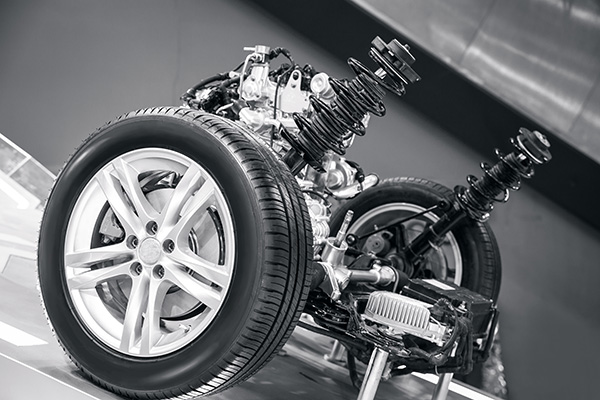
Replacing a suspension part on a newer vehicle can involve more than removing the old component and bolting in another one. Electronic dampers, ride-height sensors, specialized bushings, and vehicle-specific setup can all add steps to the work.
Not every newer car has all those features. The challenge is identifying what is fitted and following the correct procedure. That helps explain why two vehicles with a similar clunk or worn strut can require very different repair estimates.
Newer Suspension Designs Can Have More Connections
Some vehicles use several links to control each wheel's movement rather than one simple arrangement. Each link, joint, and bushing has a job in locating the wheel as the suspension travels. A small amount of wear in one connection can change how the wheel responds under braking or over bumps.
Finding that wear may require checking the suspension in the correct loaded position. A quick look with the wheels hanging does not reveal every problem. The inspection should connect the driver's complaint with actual movement before replacing an arm or link that merely appears near the sound.
Suspension Bushings Can Have Specific Installation Requirements
Modern bushings may use bonded rubber, fluid-filled sections, or a particular orientation to control movement and vibration. Replacing one with a similar-looking part can change how the assembly behaves if it doesn't meet the original requirements.
Many bonded-rubber bushings also require fasteners to be tightened at a specified suspension position. Tightening while the arm hangs freely can leave the rubber twisted once the vehicle rests at normal height. Correct orientation, loading, and torque are therefore part of the repair, even though those steps are not obvious when looking at the replacement part.
Electronic Suspension Adds Wiring And Control Checks
Adaptive dampers and other controlled components use electrical connections as well as mechanical parts. A harsh ride or suspension warning can come from a sensor, connector, or wiring fault instead of the damper itself. Meanwhile, a visible leak can exist without an electronic warning.
We compare the mechanical condition with the relevant control information. Replacement parts need to match the suspension option fitted to the car. Installing a conventional component or the wrong electronic version can leave altered operation or new faults, even if it fits the same mounting points.
Suspension Ride Height Can Affect More Than Appearance
Some vehicles use height sensors or air springs to maintain or change the vehicle's position. A sagging corner can affect suspension geometry and available travel. Depending on the design, the cause may be an air leak, a control problem, or another mechanical issue.
After certain repairs, the vehicle may need height calibration or another specified setup. Raising it until it looks level is not the same as confirming the correct setting. Height-related work should follow the manufacturer's reference points so the suspension and connected systems have the information they expect.
Suspension Alignment May Be Part Of The Finished Repair
Replacing a control arm, strut, or another locating component can affect wheel angles. Depending on the vehicle and the repair performed, you may need to check or adjust alignment after the mechanical work. Existing tire wear can provide another reason to evaluate the settings.
Alignment can't compensate for a loose joint that still lets the wheel move under load. The wear needs correction first. Ask whether the estimate includes alignment and what condition will be checked afterward. That makes it easier to compare a complete repair with a quote that stops after the component is installed.
Suspension Work Can Trigger Driver Assistance Requirements
Some camera and radar systems rely on the vehicle's position and geometry. Certain suspension or alignment changes can therefore require related calibration checks. The requirement depends on the model and the work performed; not every suspension repair requires the same camera or radar service.
The shop should follow the applicable procedure rather than add or omit calibration out of habit. If it is required, the estimate should explain that connection. A system with no warning light can still need a specified check after the vehicle's geometry changes, so normal dashboard messages are not the only guide.
A Suspension Estimate Should Explain The Full Procedure
Parts, required replacement fasteners, alignment, setup, and testing can all contribute to the price. More expensive work is not automatically better, but a lower quote may leave out a step another shop included. Ask what each recommendation addresses and what remains unconfirmed. If a quote uses a general description such as suspension service, ask which individual components, required hardware, and finishing steps it covers.
Bring recent repair records and describe when the clunk, vibration, or ride change occurs. That helps keep the inspection focused on your vehicle's symptoms. Once the repair is complete, we should check the original complaint again, along with any specified settings, so the work ends with verified operation rather than installation alone.
Get Suspension Repair In Cottonwood, AZ, With Eaton Automotive
If your newer vehicle has a clunk, uneven ride, or suspension warning, Eaton Automotive in Cottonwood, AZ, can inspect the system and explain the parts, alignment, and setup involved in the recommended repair.
Contact us to schedule a suspension inspection and review your repair options.